Outdoor advertising is no longer just about static billboards—it’s now a dynamic, data-driven ecosystem powered by technology. In 2026, Digital Out-of-Home (DOOH) is emerging as one of the fastest-growing segments in the marketing landscape, especially in India.
With the Indian DOOH market expected to grow at 20–25% CAGR and cross ₹1,000 crore by 2026, brands are rapidly shifting budgets toward digital screens.
Even more compelling—DOOH is projected to dominate over 50% of outdoor media in India by 2030, highlighting its long-term impact.
For brands like BBM (Big Banner Media), this shift presents a massive opportunity to lead innovation, deliver measurable ROI, and redefine how audiences interact with outdoor media.
Programmatic DOOH is Becoming the Default
Summary: Automation and real-time buying are revolutionizing outdoor media planning.
One of the biggest DOOH advertising trends in 2026 is the rise of programmatic DOOH (pDOOH).
Instead of manually booking billboards, brands now use automated platforms to:
- Buy ad slots in real-time
- Target audiences based on location, time, weather, and behavior
- Optimize campaigns instantly
In fact, programmatic DOOH ad spend is projected to reach $1.22 billion globally in 2026, growing at over 22% YoY.
🔍 Why This Matters for BBM:
- BBM can offer data-driven media planning
- Enables dynamic ad rotation across premium sites
- Improves ROI tracking for clients
👉 This transforms BBM from a media owner to a performance marketing partner.
Hyperlocal & Contextual Targeting is Driving Engagement
Summary: Location intelligence is making ads more relevant than ever.
DOOH in 2026 is no longer about mass visibility—it’s about precision targeting.
Brands can now:
- Show ads based on real-time traffic conditions
- Target specific neighborhoods or high-footfall zones
- Customize creatives based on time of day or audience type
For example:
- A food brand can run breakfast ads in office zones in the morning
- A retail brand can push offers near malls during weekends
This level of targeting is powered by AI and geo-data integration, making DOOH campaigns far more effective.
📈 Market Insight:
India’s DOOH market is growing rapidly due to real-time analytics and audience targeting capabilities.
🔥 BBM Advantage:
With strong presence across Lucknow and other cities, BBM can:
- Deliver hyperlocal dominance
- Offer strategic site selection
- Create high-impact localized campaigns
AI & Dynamic Creatives Are Transforming Content
Summary: Creative is no longer static—it's adaptive and intelligent.
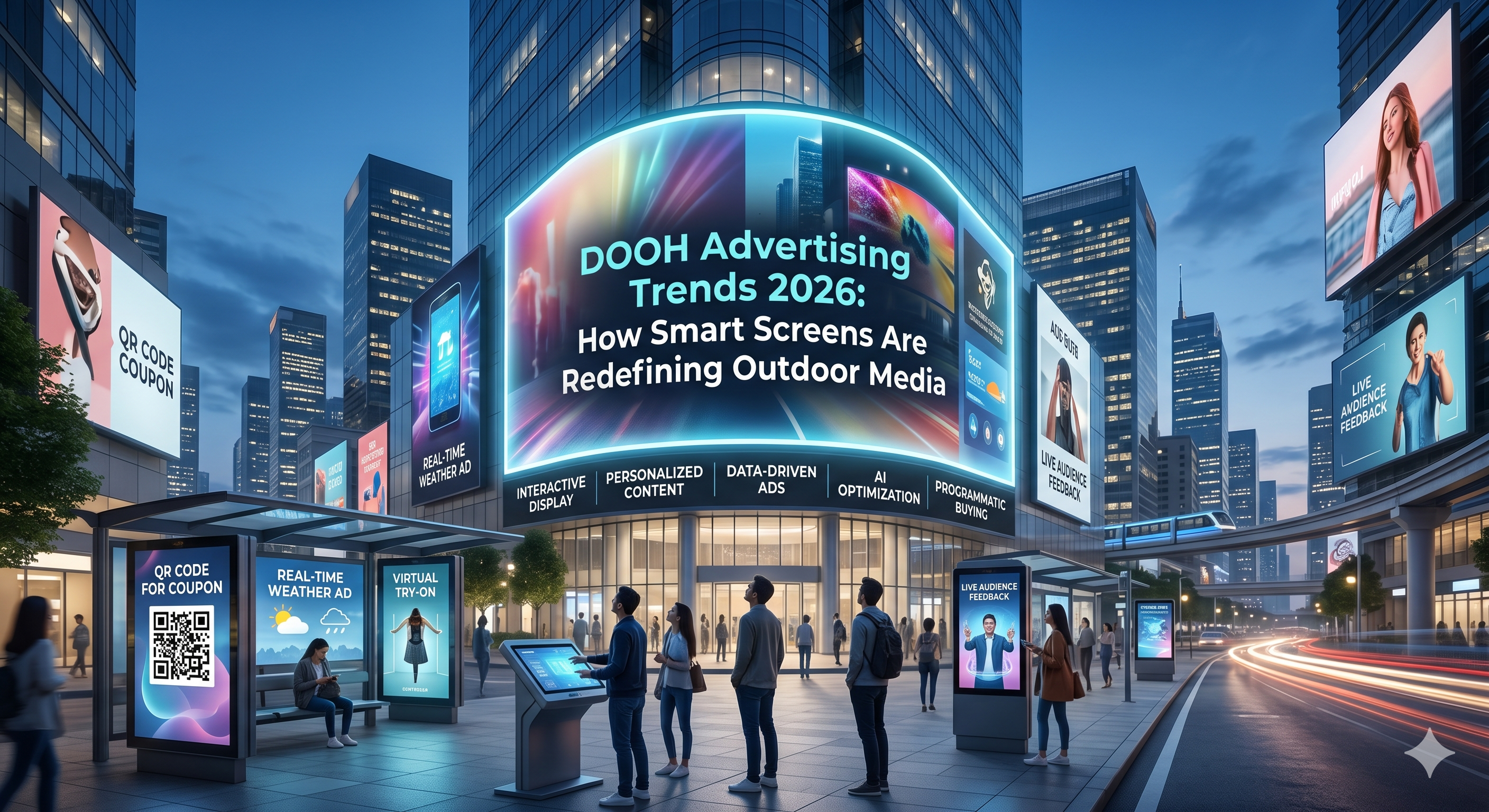
One of the most exciting DOOH trends is the use of AI-powered creatives.
Modern DOOH screens can:
- Change ads based on weather (rain, heat, etc.)
- React to live events or sports moments
- Personalize messaging dynamically
Imagine:
- A cold drink ad appearing only when temperature crosses 35°C
- A cricket-themed creative updating live during a match
📊 Industry Shift:
DOOH is becoming more interactive and intelligent, enabling real-time engagement rather than passive viewing.
💡 BBM Execution Potential:
- BBM can integrate dynamic content strategies
- Offer creative optimization services
- Deliver higher recall and engagement rates
DOOH + Mobile Integration = Omnichannel Power
Summary: DOOH is no longer standalone—it’s part of a full-funnel strategy.
In 2026, DOOH is deeply integrated with digital marketing channels.
Key strategies include:
- Retargeting users who saw outdoor ads via mobile ads
- Syncing DOOH campaigns with social media & performance marketing
- Using QR codes and NFC for instant interaction
📊 Key Trend:
Brands are increasingly using DOOH as part of omnichannel marketing strategies, improving recall and conversions.
🎯 BBM Opportunity:
- Combine outdoor with digital amplification
- Offer 360° campaign solutions
- Track offline-to-online conversions
👉 This positions BBM as a full-stack media solution provider, not just an OOH company.
Transit Media & Smart Cities Are Fueling Growth
Summary: Infrastructure expansion is unlocking premium DOOH inventory.
India’s infrastructure boom is a massive driver for DOOH growth.
Key growth areas:
- Metro stations
- Airports
- Highways & smart city projects
Transit media alone is expected to grow at 8%+ CAGR, outpacing traditional billboards.
Additionally, airport advertising is growing at 9%+ CAGR, making it one of the most premium DOOH segments.
🏙️ What This Means:
- More premium, high-impact inventory
- Higher audience dwell time
- Better brand recall
🚀 BBM Edge:
- Strategic placement across high-traffic locations
- Ability to tap into smart city ecosystems
- Premium branding opportunities for clients
Measurability & ROI Are Finally Solved
Summary: DOOH is now as measurable as digital advertising.
Historically, OOH struggled with measurement—but that’s changing fast.
Modern DOOH offers:
- Impression tracking
- Audience analytics
- Campaign performance dashboards
📊 Market Insight:
OOH in India is shifting from visibility to accountability and measurable impact, marking a major industry evolution.
💼 BBM Differentiation:
- Provide transparent reporting
- Offer data-backed insights
- Build client trust through measurable ROI
👉 This is a key USP that BBM can highlight in pitches.
Conclusion: Why BBM is Perfectly Positioned for the DOOH Boom
The future of outdoor advertising is digital, dynamic, and data-driven—and 2026 is the tipping point.
From programmatic buying to AI creatives and hyperlocal targeting, DOOH is transforming how brands connect with audiences in the real world.
For BBM, this is not just a trend—it’s a strategic advantage.
🔑 Key Takeaways:
- DOOH is growing at double-digit rates in India
- Programmatic and AI are reshaping campaign execution
- Transit and smart city infrastructure are expanding inventory
- Measurability is unlocking serious brand budgets
👉 With strong local presence, premium inventory, and execution capabilities, BBM can lead the DOOH revolution in India.
FAQs
1. What is DOOH advertising?
DOOH (Digital Out-of-Home) advertising refers to digital screens used for outdoor ads, such as LED billboards, transit displays, and mall screens.
2. Why is DOOH growing so fast in 2026?
Because of programmatic buying, real-time targeting, and measurable ROI, making it more effective than traditional OOH.
3. How is DOOH different from traditional billboards?
DOOH allows:
- Dynamic content
- Real-time updates
- Audience targeting
- Performance tracking
4. Is DOOH effective for local businesses?
Yes—especially with hyperlocal targeting, businesses can reach relevant audiences in specific areas.
5. Why should brands choose BBM for DOOH campaigns?
BBM offers:
- Premium locations
- Strategic planning
- Data-driven execution
- End-to-end campaign solutions